The World Nomads Ethnographic Film Festival opens on Friday, August 21, 2026 at the “Nomads” World Culture Festival in Ulaanbaatar. Hosted by the Commission on Nomadic Peoples and the International Institute for the Study of Nomadic Civilizations under the Auspices of UNESCO.
Block 1: Pastoralism in Film ⏱️ 12:00 PM – 1:30 PM
Opening 75-minute screening presentation featuring climate change, water harvesting, Maasai youth, and Rajasthan Raika camel herders, followed by a joint filmmaker panel discussion.
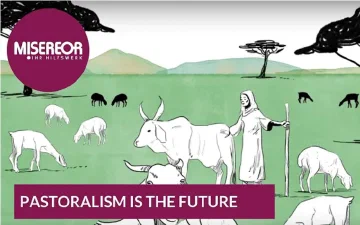
Man-made climate change is creating conditions on our planet that are increasingly characterised by variability and unpredictability.
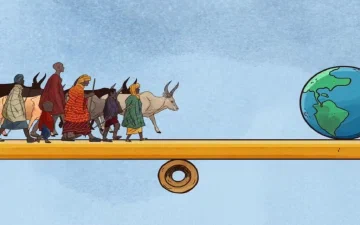
Part of the MOOC course material for Pastoralism in Development created by IIED, MISEREOR, and Saverio Krätli.
Produced for the Stockholm International Water Institute (SIWI), this short documentary showcases smallholder farmers and pastoralists as frontline water managers in Africa, advocating for investments in rainfed agriculture and soil moisture conservation.
A 10-minute participatory documentary made by a freshly trained-in-filmmaking group of young Kenyan Maasai women and men from the Maasai Mara, sharing their firsthand observations on climate change, changing seasons, land privatization, and cultural transformation.
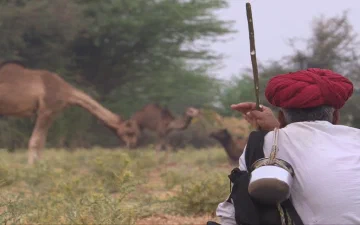
Highlights the struggle of the Raika camel herders of Rajasthan, India, as they advocate for grazing access rights within the Kumbhalgarh Wildlife Sanctuary, demonstrating their role as stewards of forest biodiversity.
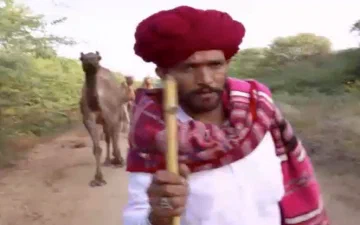
Features community-led initiatives in Rajasthan to create sustainable livelihoods from camel milk and camel wool products, aiming to save endangered camel herds and preserve the traditional Raika way of life.
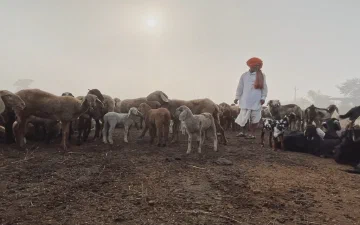
For hundreds of years, the Dhangar nomads have kept sheep on the Deccan Plateau in Maharashtra State, India.
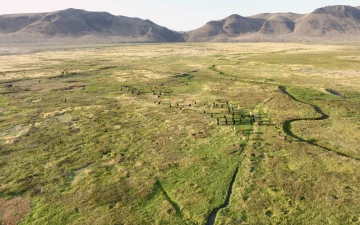
In northeastern Nevada, the Humboldt Ranch is transforming more than 350,000 acres of public and private rangelands through innovative grazing practices.
Panel Discussion: Pastoralism, Media, and Climate Action
- Saverio Krätli (Climate change and pastoralism)
- Radhika Gupta (Catching Raindrops in Africa)
- Joana Roque de Pinho (Maasai Voices on Climate Change)
An interactive joint panel discussion with presenting filmmakers Saverio Krätli, Radhika Gupta, and Joana Roque de Pinho, moderated by the festival host. The panel explores frontline climate adaptation, rainwater harvesting, Indigenous youth filmmaking, and policy advocacy across African and global drylands.
Block 2: Social and Environmental Change ⏱️ 1:45 PM – 3:50 PM
Focusing on Indigenous environmental justice in Mongolia, Saharan salt trade caravans, and Slovenian youth transhumance, featuring live filmmaker Q&A discussions.
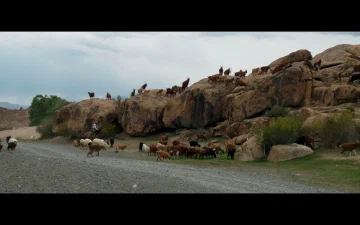
An ethnographic documentary examining how climate change, overgrazing, and destructive mining practices threaten Mongolian nomadic herders.
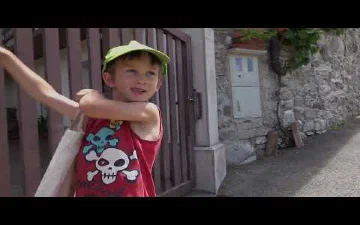
A student workshop documentary about a Slovenian urban family who moved to the countryside to dedicate themselves to goat herding, capturing their daily commitment, hard manual labor, and family bond.
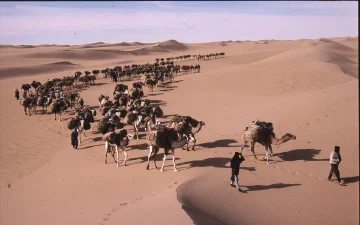
Filmed in 2000 with lightweight equipment in harsh desert conditions, this documentary follows a Tuareg (Kel Eway Imjaghan) camel caravan traveling across the Sahara to Bilma, documenting traditional trade routes, desert survival, and social organization.
Block 3: Subarctic Tundra & Boarding School Transitions ⏱️ 4:00 PM – 5:05 PM
An intimate examination of Arctic nomadic childhood and tundra youth preparing for remote boarding school.
Filmed in the Arctic tundra of the Yamal Peninsula, Russia (produced in 2024), this intimate documentary follows Nika, a young Nenets girl living with her nomadic reindeer herding family as she prepares to leave her tundra home for a remote boarding school.
Block 4: Alpine Transhumance & High Mountain Herding ⏱️ 5:15 PM – 6:55 PM
Our Day 1 closing feature follows young Macedonian brothers battling loneliness and harsh terrain to sustain transhumance traditions.
A feature-length documentary produced in 2025 following young brothers herding sheep in the rugged mountains of North Macedonia, delving into family relationships, loneliness, and the struggle to sustain high-altitude transhumance.